
Apex Multispeciality Hospital : Kopar Khairane
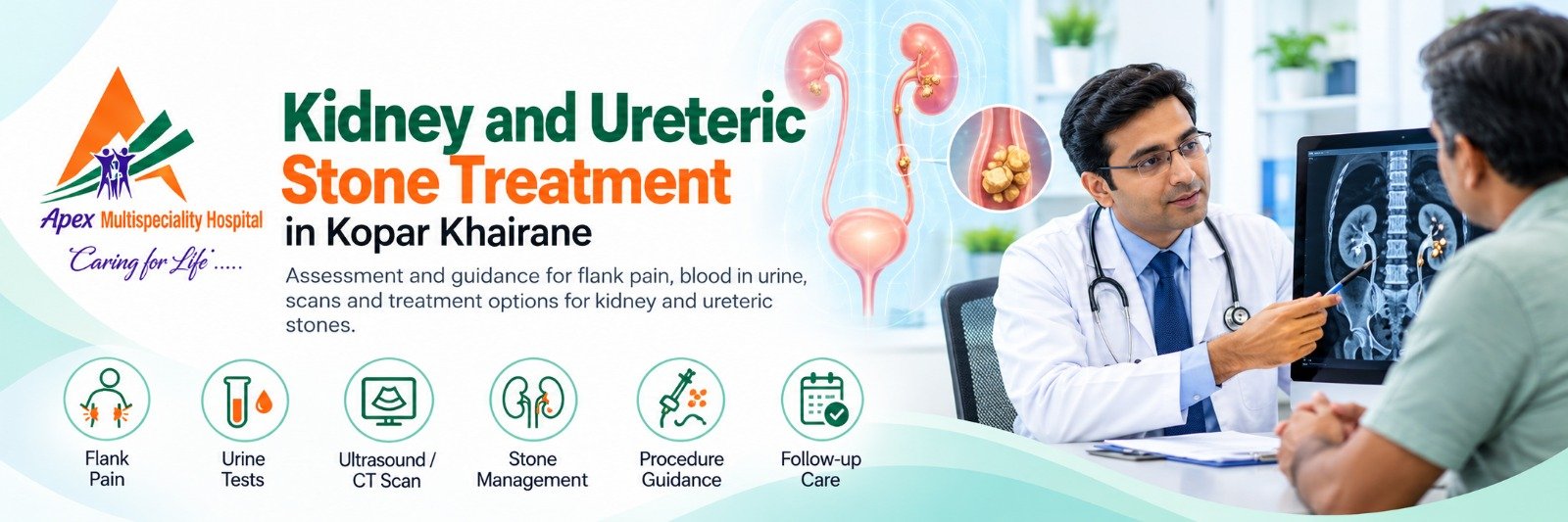
Kidney and Ureteric Stone Treatment in Kopar Khairane
Kidney and ureteric stones can cause sudden pain in the side, nausea or blood in the urine. The right treatment depends on where the stone is, its size and whether it is blocking urine flow. Small stones may pass with monitoring; others need a procedure.
For an assessment in Kopar Khairane, contact Apex Multispeciality Hospital in Sector 19, near MSEB. The appointment team can confirm the relevant consultant’s availability and whether the required service is provided at the hospital. |
Symptoms that deserve attention
Pain that comes in waves and may move towards the groin; blood in urine; nausea or vomiting; burning or frequent urination. A stone can also be found on a scan taken for another reason. Symptoms alone cannot establish its size or location.
How the problem is assessed
A urine test checks for infection or blood, and blood tests can assess kidney function. Ultrasound or a CT scan may be advised, depending on symptoms and circumstances. Tell the doctor if you are pregnant, have one functioning kidney, take blood thinners or have had stones before.
Treatment options to discuss
Observation and prescribed medicines may be suitable for selected small stones. Other options include shockwave lithotripsy, ureteroscopy, retrograde intrarenal surgery (RIRS) or percutaneous nephrolithotomy (PCNL). These are general options, not a statement that all are available at Apex. An infected, obstructed kidney may need urgent drainage before the stone is treated.
Recovery and follow up
After a procedure, a temporary ureteric stent may cause urgency or discomfort. Ask when it must be removed; do not miss that appointment. Blood in the urine, infection, ureter injury, residual stones and the need for another procedure are possible. Prevention advice should reflect stone analysis, kidney function and any fluid restrictions.
When to seek urgent help
Side pain with fever or shivering, inability to pass urine, persistent vomiting or severe pain needs urgent assessment. Do not rely on drinking extra water to treat an obstruction.
Planning your visit
Bring your previous reports and a list of medicines, including non-prescription products. Ask the doctor what the proposed treatment is intended to achieve, what alternatives are available and what follow-up will involve. Tell the team about any allergies or earlier problems with anaesthesia.
For current consultation fees or a treatment estimate, contact Apex Hospital. The amount depends on the assessment, investigations and care required. Ask what is included and whether any follow-up, medicines or consumables are billed separately.
Frequently asked questions
Can every stone pass without surgery?
No. Passage depends on size, position and other clinical factors. A blocked or infected urinary system needs prompt medical assessment.
Is laser treatment always required?
No. Observation, medicines or other procedures may be more suitable. The urologist should explain the reason for the recommended approach.
Can stones return after treatment?
Yes. Follow-up and individual advice on fluids and diet can help reduce the risk, but recurrence cannot be ruled out.
Appointment information
Apex Multispeciality Hospital
C-104, Bhumiraj Casabela CHS Ltd, Plot No. B-219, Sector 19, Near MSEB, Kopar Khairane, Navi Mumbai, Maharashtra 400709
Call +91 8591235064 to confirm consultation timings and current service availability. For urgent symptoms, seek emergency care instead of waiting for an online response.